

Why GLP-1 Medications Stop Working — and How to Break Through the Plateau
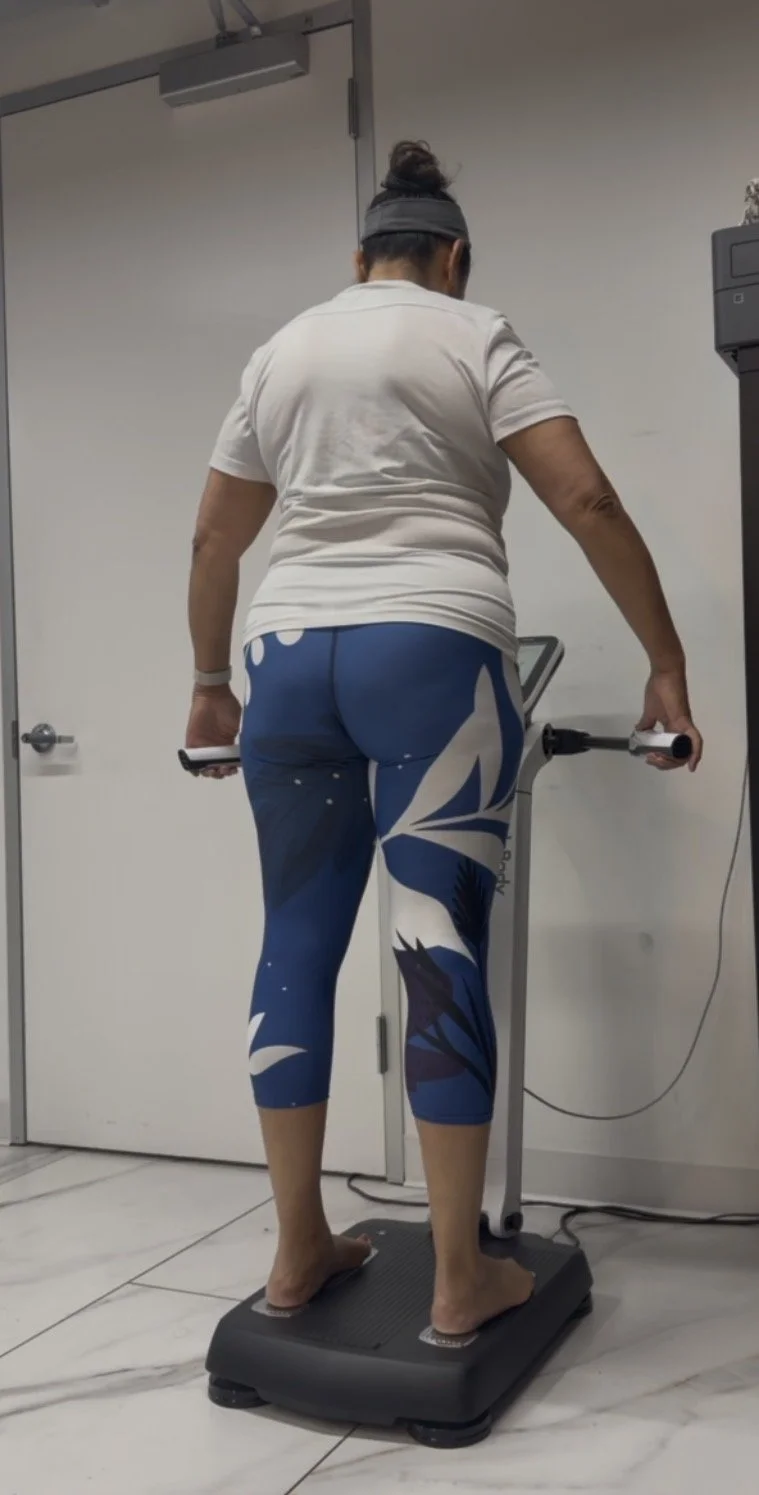
Dr. Karen undergoing an InBody body composition scan to evaluate a GLP-1 weight loss plateau. An InBody scan measure fat mass vs. lean muscle - the first thing to evaluate when a patient plateaus on GLP-1 therapy.
A Clinical Note for Women Who’ve Hit a Plateau
By Dr. Karen | Life Long Weigh
You started GLP-1 therapy and the results were real. The appetite shifted. The scale moved. For the first time in years, weight loss felt possible again.
Then something changed.
The medication is the same. Your dose hasn’t changed. But the weight loss has slowed — or stopped — and you’re wondering whether this is as good as it gets.
The plateau isn’t a failure. It’s a signal your body needs more than appetite suppression alone.
This is one of the most common scenarios I see in practice. And it’s one of the most misunderstood.
What GLP-1 Medications Like Semaglutide and Tirzepatide Actually Do
GLP-1 receptor agonists — medications like semaglutide and tirzepatide — work primarily by reducing appetite and slowing gastric emptying. They help you eat less by making you feel full sooner and reducing food-related cravings. They also improve insulin sensitivity and can reduce inflammation.
What they don’t always do is fully resolve the underlying metabolic factors that drive weight gain and weight resistance in the first place.
For many women — especially those over 40 — those underlying factors are significant. And when they aren’t addressed, even a powerful medication hits a wall.
Why GLP-1 Weight Loss Plateaus Happen: The Clinical Picture
When weight loss stalls on a GLP-1, there are usually several contributing factors:
1. Metabolic adaptation
As you lose weight, your resting metabolic rate decreases. Your body becomes more efficient — requiring fewer calories to function. This is a normal physiological response, but it works against continued weight loss.
2. Lean mass loss
Rapid weight loss on GLP-1 therapy often includes a significant loss of lean mass — in some studies, up to 40% of total weight lost. Lean mass includes muscle, which is metabolically active tissue. Less of it means a slower metabolism and greater difficulty maintaining weight loss long-term.
3. Hormonal shifts
For women over 40, estrogen decline — whether perimenopausal or postmenopausal — affects fat distribution, insulin sensitivity, and how the body responds to caloric restriction. A GLP-1 medication cannot fully compensate for a hormonal environment that resists weight loss.
4. Insulin resistance that hasn’t fully resolved
GLP-1s improve insulin sensitivity, but they don’t always resolve it completely — particularly when chronic inflammation, poor sleep, or cortisol dysregulation are also present. An insulin-resistant metabolic environment continues to favor fat storage over fat burning.
5. Caloric compensation
As appetite suppression becomes the new normal, some patients gradually increase their intake without realizing it. The novelty of feeling full wears off. A small creep in food volume can be enough to stall progress.
A plateau on GLP-1 therapy is not a sign that you’ve done something wrong. It’s a sign that appetite alone was never the whole problem.
What Needs to Be Evaluated When Your GLP-1 Stops Working
When I see a patient who has plateaued on GLP-1 therapy, I’m not looking to switch medications or raise the dose as a first response. I’m asking a different set of questions:
• What is the body composition picture? How much of the weight lost was fat versus lean mass?
• What do metabolic markers show — fasting insulin, HbA1c, fasting glucose, triglycerides?
• Is there evidence of thyroid dysfunction, cortisol dysregulation, or hormonal imbalance?
• How is sleep quality? Poor sleep independently elevates cortisol and drives insulin resistance.
• Is the patient getting adequate protein and resistance training to protect lean mass?
• Are there signs of inflammation that haven’t been addressed?
The answers to these questions tell me far more than a number on a scale.
How to Break Through a GLP-1 Plateau: What Actually Moves the Needle
In my clinical experience, the patients who break through a GLP-1 plateau successfully are those who address the full metabolic picture — not just appetite.
That typically means:
• Prioritizing protein intake to preserve and rebuild lean muscle mass
• Incorporating resistance training — not just cardio
• Addressing hormonal health, including evaluating estrogen and progesterone status in perimenopausal women where clinically indicated
• Optimizing sleep and stress, which directly impact cortisol and insulin sensitivity
• Using targeted laboratory evaluation to identify and treat specific metabolic barriers
• Considering dose adjustments or medication transitions in partnership with your prescriber, once these factors are assessed
A GLP-1 medication is a powerful tool. But tools require a skilled hand — and a complete strategy.
The patients who see the best long-term results aren’t necessarily those on the highest doses. They’re the ones whose full metabolic picture is understood and treated.
A Note on Dose Escalation
Dose titration is a normal, appropriate part of GLP-1 therapy, and for many patients an increase is exactly the right next step. But dose escalation without metabolic assessment can be a short-term solution to a long-term problem.
Higher doses come with a higher side effect burden. And if underlying metabolic barriers remain unaddressed, the plateau tends to return — at a higher dose, with a narrower margin to work with.
The goal of GLP-1 therapy in my practice is not to stay on medication indefinitely at escalating doses. It’s to use the metabolic window the medication opens to address the root causes of weight resistance — so that when the time comes to taper or transition, the progress holds.
What This Means for You
If you’ve hit a wall on your GLP-1 medication, the answer is rarely to simply wait it out or assume you’ve reached your ceiling.
A plateau is an invitation to look deeper.
It’s an opportunity to understand what your body is actually doing metabolically — and to build a strategy that works with your physiology, not against it.
That’s the kind of care I provide at Life Long Weigh. Not a prescription and a follow-up in three months. A complete picture, an individualized plan, and a clinical partnership that evolves with you.