

Why What You Lose Matters More Than How Much
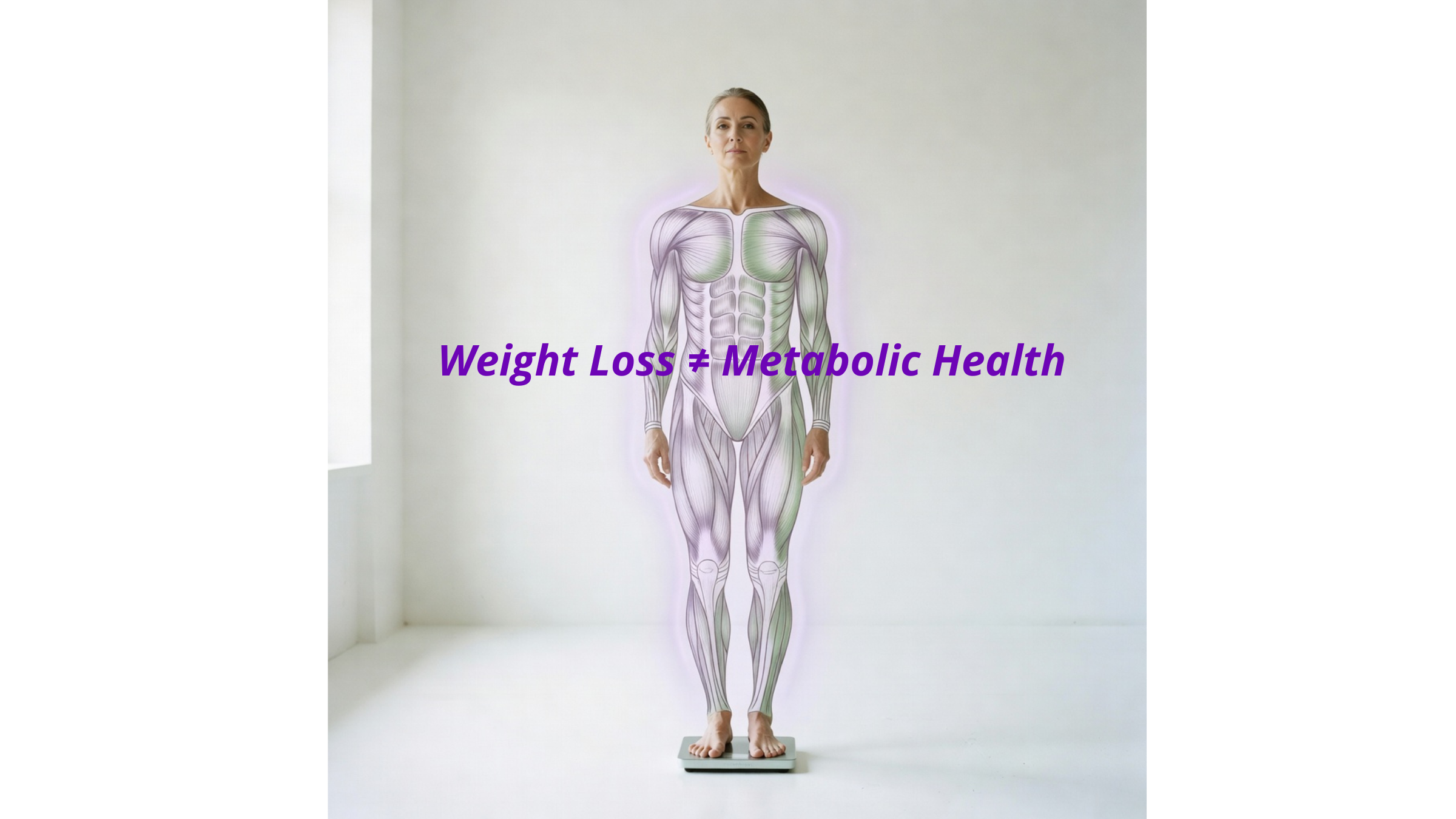
GLP-’s help you lose weight BUT they don’t protect your muscle. These medications are effective for weight loss. But Weight loss alone in not the goal.
Without enough protein and resistance training, many patients lose muscle along with fat, leading to fatigue, plateaus, and long-term metabolic issues.
The Promise vs. What I’m Seeing
GLP-1 medications like semaglutide and tirzepatide are effective. They reduce appetite and help patients lose weight.
That part is real.
But here’s what I’m seeing clinically:
Patients losing weight but also losing strength
Fatigue and lower energy
Plateaus after early success
Results that don’t look or feel the way they expected
The issue isn’t the medication.
It’s what’s missing alongside it.
Weight Loss Alone Is Not the Goal
GLP-1s reduce how much you eat.
They do not:
Preserve muscle
Ensure adequate protein intake
Stimulate muscle growth
So when intake drops, your body pulls from both fat and muscle.
And muscle is the key variable here.
Muscle drives:
Metabolic rate
Strength and function
Long-term weight maintenance
When you lose muscle, everything becomes harder.
Skinny Without Muscle Is Not Health
This is the part that often gets overlooked.
Losing weight without maintaining or building muscle leads to:
Lower metabolic reserve
Poor strength and function
Less favorable body composition
You may be smaller on the scale.
But you are not necessarily healthier.
“Skinny” without muscle is metabolically fragile.
It sets you up for:
Easier weight regain
Lower energy
Worse long-term outcomes
The goal is not just weight loss.
The goal is better body composition and metabolic health.
Protein Is Not Optional on GLP-1s
Because appetite is suppressed, protein intake often drops unintentionally.
That’s a problem.
As we age, muscle becomes harder to maintain. Your body requires a stronger stimulus to preserve it.
That includes:
Adequate protein
Consistent resistance exercise
As a baseline:
Aim for ~25–30 grams of protein per meal
Do not rely on hunger cues to guide this
On a GLP-1, protein becomes protective.
Resistance Training Is Required
GLP-1s help regulate appetite.
They do not signal your body to keep muscle.
Resistance training does.
Even a simple, consistent program:
Preserves muscle
Supports metabolism
Improves how your body looks and functions
Without this stimulus, weight loss will include muscle.
Why Fatigue and Plateaus Happen
When intake drops:
Protein drops
Micronutrients drop
Muscle mass may decline
This leads to:
Fatigue
Poor recovery
Slower metabolism over time
Then the plateau comes.
At that point, increasing the dose or eating less is not the answer.
Supporting the system is.
A Better Way to Use GLP-1s
GLP-1s are a powerful tool.
But they work best when paired with:
Intentional protein intake
Resistance training
Foundational nutritional support
This approach:
Preserves muscle
Maintains metabolic rate
Improves long-term outcomes
Where to Start
If you’re on a GLP-1:
Prioritize protein at every meal
Add resistance training, even if basic
Support your foundation with key nutrients
I’ve outlined simple protocols for:
Muscle and metabolism support
Foundational supplementation
Recovery and micronutrient support
You can find these in my shop.
If you want a personalized plan, I also offer consults.
Bottom line:
GLP-1s help you lose weight.
Protein and resistance training determine what you lose.
Protect your muscle. That’s what protects your metabolism.
Not sure where to start?
→Explore my Muscle & Metabolism support protocols
→Or book a consult for a personalized plan